

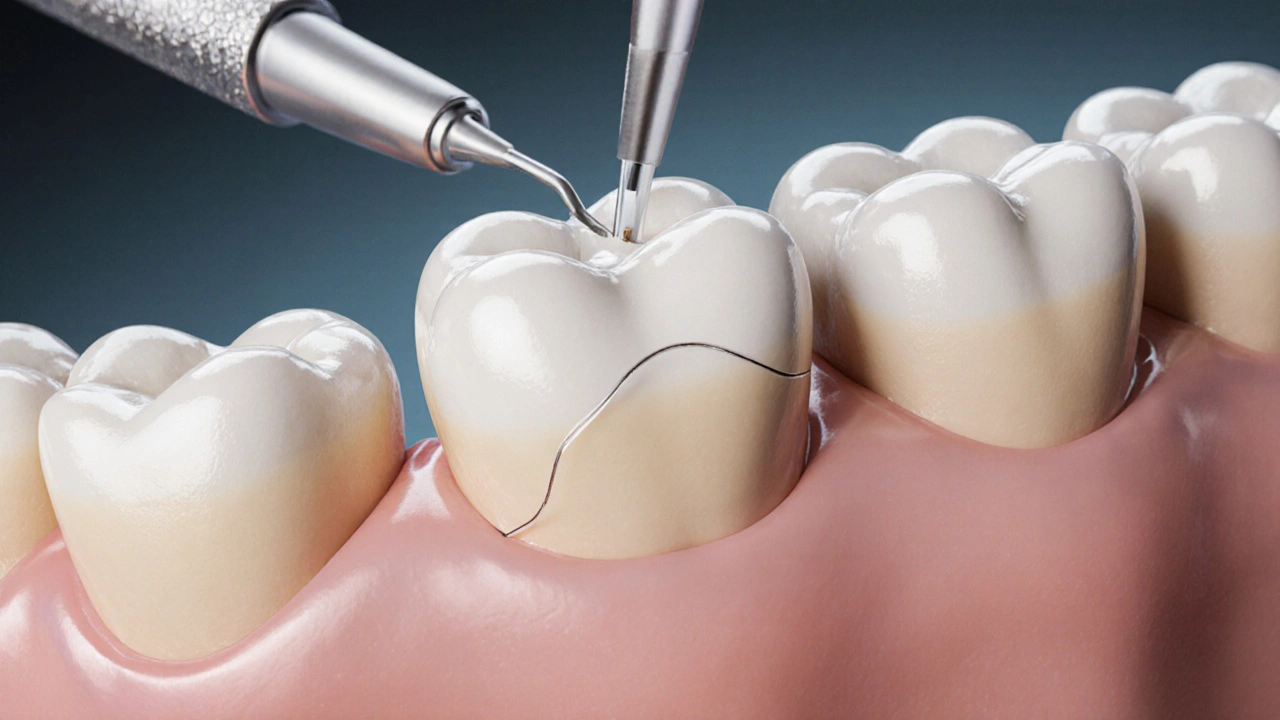
Co je kompozitní onlay a kdy se používá?
Kompozitní onlay je zubní rekonstrukce pro středně velké poškození zubu - lepší než plomba, ale méně invazivní než korunka. Více o výhodách, rozdílech a postupu.
When you need a dental restoration that’s stronger than a filling but less invasive than a crown, kompozitní onlay, a type of tooth restoration made from composite resin that covers the chewing surface of a molar or premolar. Also known as indirect composite inlay/onlay, it’s a smart middle ground between a simple filling and a full crown. Unlike traditional fillings that are built up inside the tooth, an onlay is custom-made in a lab to fit precisely over the damaged part — like a puzzle piece made to restore function and look natural.
Many people confuse kompozitní onlay, a tooth-colored restoration made from composite resin, designed to restore damaged molars. Also known as indirect composite restoration, it’s a smart middle ground between a simple filling and a full crown. with fillings or ceramic inlays. But here’s the key difference: a filling is built directly in your mouth, while an onlay is crafted outside and then bonded in. That means better fit, less shrinkage, and longer life. And unlike ceramic onlays, which are harder and more expensive, composite ones are more forgiving, easier to repair, and significantly cheaper — often half the price of ceramic.
They’re especially useful when you have a medium-sized cavity that’s too big for a regular filling but doesn’t need a full crown. Think of a cracked cusp or a large decayed area on the chewing surface — that’s where an onlay shines. It preserves more of your natural tooth than a crown would, and it’s less aggressive than removing a lot of healthy enamel for a ceramic inlay.
But there’s a catch: not all composite onlays are equal. The material quality, the skill of the dentist, and how well it’s bonded to your tooth make all the difference. Some clinics cut corners with cheap resin or skip proper curing steps, and then the onlay chips, stains, or falls out within a year. That’s why you shouldn’t chase the lowest price. Look for a dentist who uses high-grade composite, takes impressions carefully, and uses a light-curing system that ensures full hardening.
And don’t forget maintenance. You can’t use abrasive toothpaste on composite onlays — the same ones that are fine for natural teeth can scratch the surface over time. That’s why we wrote about zubní pastu, toothpaste that can damage restorations like ceramic or composite onlays if it contains harsh abrasives. Also known as abrasive toothpaste, it’s a common culprit behind premature wear on restorations. and why you should avoid it. Use a soft brush, fluoride-free paste (if recommended), and floss gently around the edges to prevent microleakage.
They’re not forever — most last 7 to 12 years, depending on your bite, diet, and oral hygiene. But if you take care of them, they can easily outlast a traditional filling. And if one chips? Good news: unlike ceramic, composite onlays can often be repaired in one visit without replacing the whole thing.
So if you’re facing a moderate tooth damage and want something that looks natural, costs less than ceramic, and saves your tooth structure — a composite onlay might be your best bet. Just make sure you’re getting it from someone who knows how to do it right.
Below you’ll find real-life guides on how to choose the right restoration, what to avoid after getting one, how to spot early damage, and why some dentists still push crowns when an onlay would do just fine. No fluff. Just what actually matters for your teeth.
Kompozitní onlay je zubní rekonstrukce pro středně velké poškození zubu - lepší než plomba, ale méně invazivní než korunka. Více o výhodách, rozdílech a postupu.