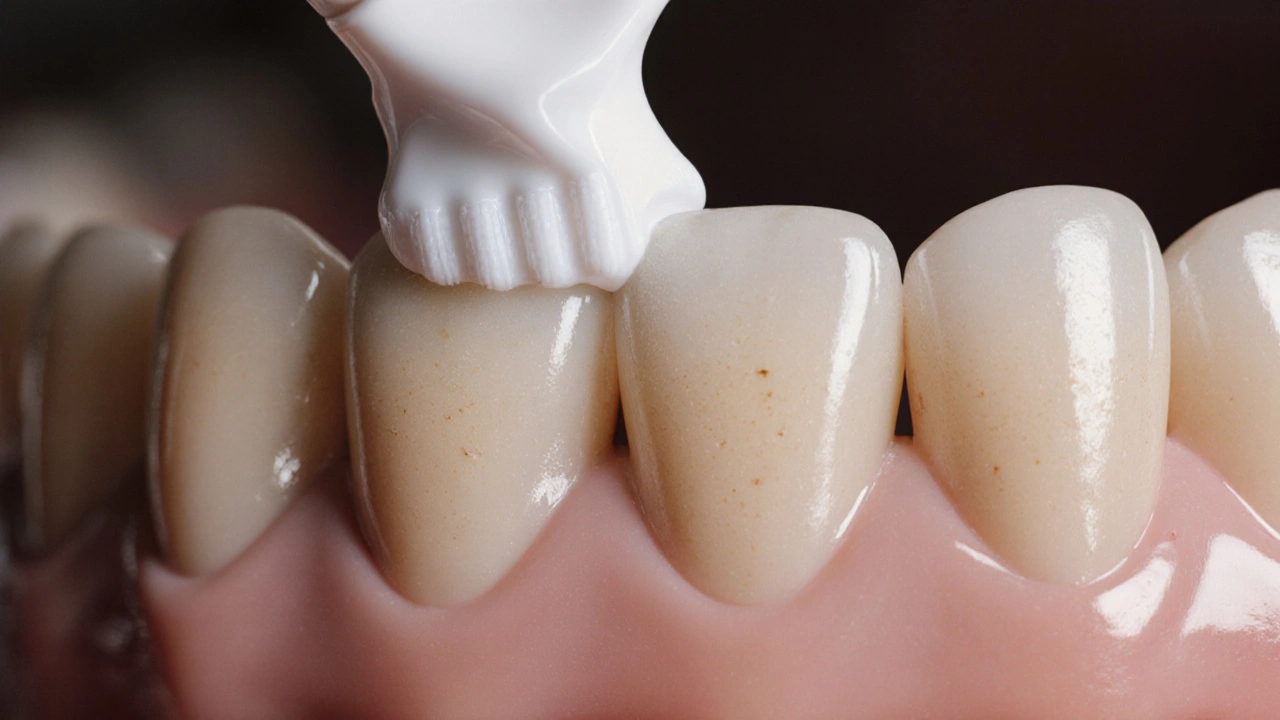
Keramická onlay: Co to je, když se hodí a co o ní musíte vědět
When you need to fix a damaged tooth but don’t want to grind it down like a crown, keramická onlay, je typ zubní náhrady, která se přizpůsobuje poškozené části zubu a zachovává co nejvíce původního zubního materiálu. Also known as keramická vložka, it is a precise, custom-made restoration that fits into the tooth like a puzzle piece—strong, natural-looking, and built to last. Unlike a regular filling that just fills a hole, an onlay rebuilds the chewing surface and sides of the tooth, making it ideal when the damage is too big for a filling but not bad enough for a full crown.
Most people think they need a crown when a tooth is cracked or has a large cavity, but that’s not always true. A keramická onlay is often the smarter choice because it preserves more of your natural tooth. It’s made from high-quality ceramic that matches your tooth color perfectly and doesn’t darken over time like composite fillings. You’ll hardly notice it’s not your original tooth. And because it’s custom-fitted in a lab, it seals better than a regular filling, reducing the risk of new cavities forming underneath.
It’s not for every case, though. If your tooth is barely damaged, a simple filling works fine. If it’s shattered or has had a root canal, a full zubní korunka might be necessary. But if you have a medium-sized cavity, a fractured cusp, or a failing old filling, an keramická onlay is often the sweet spot. It’s stronger than a filling, less invasive than a crown, and lasts longer than both—typically 10 to 15 years with good care.
Many patients worry about cost, but a keramická onlay is often cheaper than a crown and lasts just as long. It’s also more durable than composite fillings, which can wear down or chip under heavy chewing. And because it’s ceramic, it doesn’t react to temperature changes like metal fillings, so you won’t feel that sharp cold sensation when drinking ice water.
What you need to know: the process takes two visits. First, your dentist removes the old filling or decay, takes a digital scan or impression, and puts a temporary onlay. Then, in about two weeks, you come back and the custom-made ceramic onlay is bonded in place. No drilling of healthy tooth, no metal showing, no guesswork.
People who get keramická onlay usually don’t regret it. They like that they kept most of their natural tooth, they don’t feel sensitivity, and their bite feels normal again. And unlike some crowns that look fake or feel bulky, an onlay blends in so well, your dentist might be the only one who knows it’s not your original tooth.
In the posts below, you’ll find real-life examples of how keramická onlay compares to other restorations, what to expect during treatment, how to care for it, and why some dentists recommend it over crowns—even for back teeth. You’ll also see what happens when people wait too long, and how to avoid common mistakes that lead to failure. Whether you’re considering this option or just curious, these articles give you the straight facts—no marketing, no fluff.