

Kontrola potřeby augmentace kosti
Náš nástroj vám pomůže posoudit, zda je potřeba augmentace kosti před umístěním zubního implantátu. Zadejte informace o svém stavu a získejte konkrétní doporučení.
Výsledek
Začněte prosím vyplňovat formulář, abyste získali konkrétní doporučení.
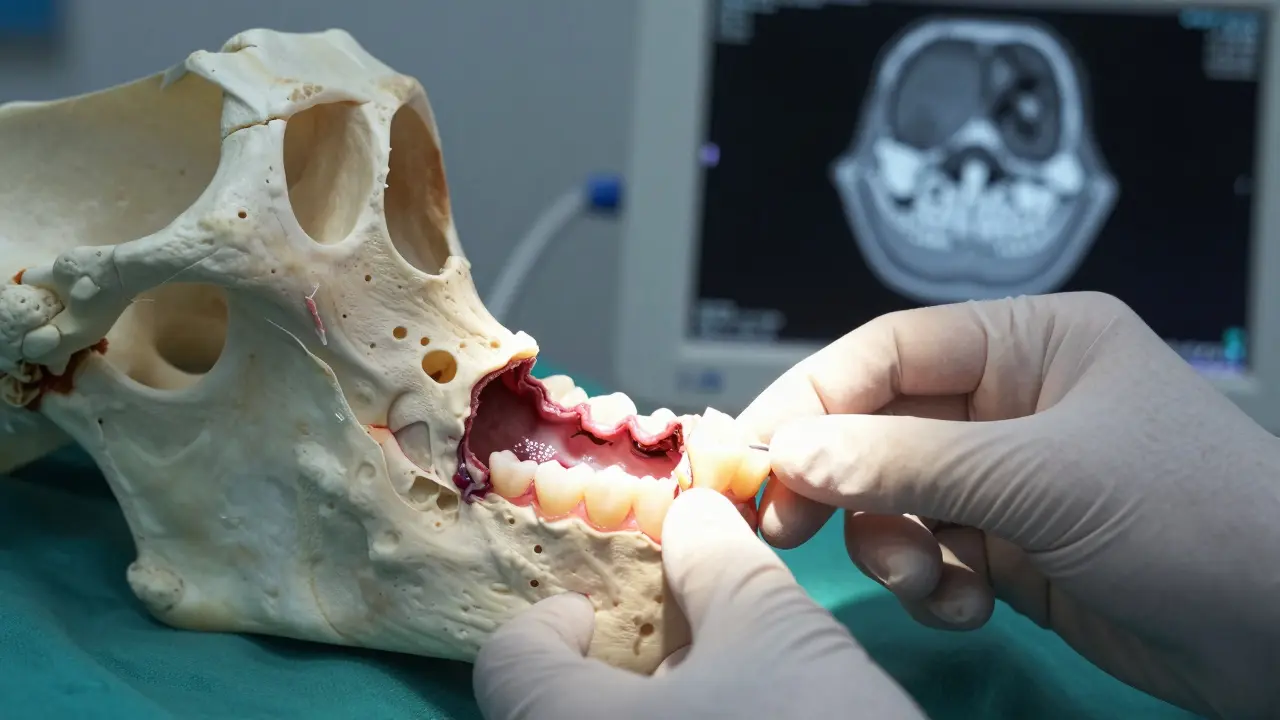
When you lose a tooth, it’s not just the tooth that’s gone - the bone underneath starts to disappear too. Over time, your jawbone can shrink, making it harder or even impossible to get dental implants. That’s where augmentace kosti comes in. It’s not a fancy term for surgery - it’s a simple, common solution to rebuild lost bone so implants can work properly.
Proč se kost v čelisti ztrácí?
Your jawbone isn’t just there to hold your teeth. It’s alive. Every time you chew, the pressure from your teeth stimulates the bone, telling it to stay strong. When you lose a tooth, that stimulation stops. Within months, the bone starts to resorb - it breaks down and gets reabsorbed by your body. It’s like a muscle that withers if you don’t use it.
Studies show that after a tooth extraction, the jawbone can lose up to 40% of its width in the first year alone. In the upper jaw, especially near the sinuses, bone loss can be even worse. If you wait too long before replacing a missing tooth, you might end up with not enough bone to support an implant.
Co je augmentace kosti?
Augmentace kosti means adding bone material to your jaw so it’s thick and tall enough for an implant. Think of it like filling a hole in the ground before laying a foundation. You can’t build a sturdy house on sand - same with implants and bone.
The material used for the augmentation can come from different places:
- Vlastní kost - taken from your own body, usually from the chin, hip, or lower jaw. This is the gold standard because your body accepts it perfectly.
- Umělá kost - made from synthetic materials or processed animal bone (like cow or pig). These are sterilized and safe. They act as a scaffold for your body to grow new bone around.
- Donor kost - from human donors, carefully screened and processed. Less common in the Czech Republic, but still used in complex cases.
The procedure is done under local anesthesia. Most patients say it feels like a routine extraction - a bit of pressure, no pain. You’ll be back to normal eating within a week, though full healing takes 4 to 9 months.
Kdy je augmentace kosti potřeba?
Not everyone needs it. But here are the most common situations:
- You’ve been missing a tooth for more than 6 months.
- Your jawbone looks thin on an X-ray or CT scan.
- You’re getting multiple implants in a row - like replacing a whole row of back teeth.
- You had a tooth extracted years ago and now want implants.
- You have a large sinus cavity in the upper jaw (common after losing upper molars).
In Brno, we see a lot of patients who waited too long. They came in saying, “I didn’t think it mattered.” But when we scanned their jaw, the bone was so thin we couldn’t even place a small implant without first rebuilding it. That’s when augmentace kosti becomes necessary - not optional.
Co se děje během operace?
The procedure usually takes 30 to 90 minutes, depending on how much bone you need. Here’s how it typically goes:
- Your dentist or oral surgeon makes a small cut in your gum to expose the jawbone.
- The bone graft material is placed on the area where bone is missing.
- A thin membrane might be placed over the graft to protect it and guide healing.
- The gum is stitched back together.
Some clinics use special techniques like sinus lift - a type of augmentation for the upper jaw. When back teeth are lost, the sinus cavity can drop down, leaving almost no space for implants. In a sinus lift, the membrane lining the sinus is gently lifted, and bone material is packed underneath. This creates room for implants in the back of the upper jaw.
Co můžete očekávat po operaci?
Recovery is usually smooth. Most people feel mild swelling and discomfort for a few days. Your dentist will give you:
- Painkillers (usually ibuprofen or paracetamol)
- Antibiotics to prevent infection
- Instructions to avoid blowing your nose, smoking, or drinking through a straw
- A soft diet for the first week
You’ll need to come back in 7-10 days to have stitches removed. Then you wait. No rushing. Bone grows slowly. In 4 months, your body starts replacing the graft with your own bone. By 6-9 months, it’s usually strong enough for an implant.
Co se stane, když augmentaci kosti neprovedete?
If you skip it, you might be left with two bad choices:
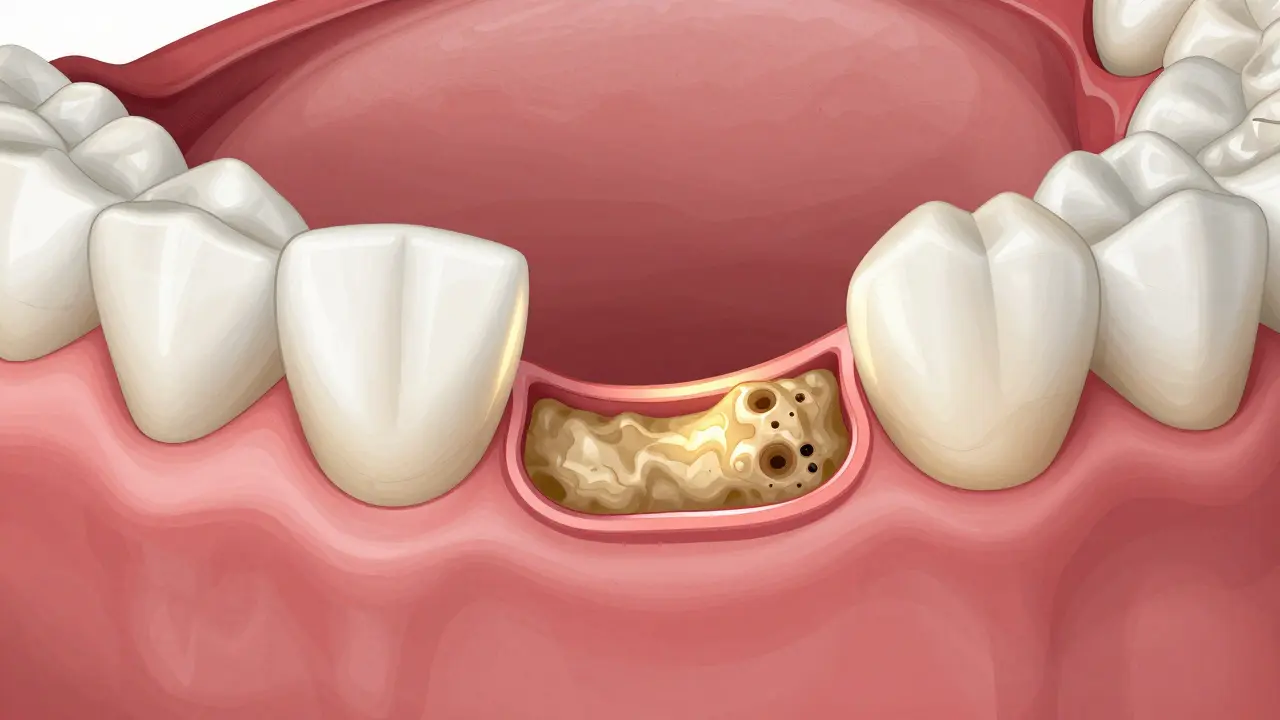
- Neřešit to vůbec - then you’re stuck with a gap. That can lead to shifting teeth, bite problems, and even jaw joint pain.
- Pokusit se dát implantát bez dostatečného podkladu - this almost always fails. The implant won’t hold. It might loosen, get infected, or fall out. You’ll end up paying more in the long run.
There’s also a risk of damaging nerves or sinuses if the implant is placed too close. That’s why imaging - like a 3D CT scan - is essential before any implant planning. You can’t guess bone height. You have to measure it.
Je augmentace kosti bolestivá?
No. Not more than a tooth extraction. Most patients rate the pain as 2 out of 10. You might feel pressure during the procedure, but not pain. Afterward, swelling is normal, especially if you had a sinus lift. Ice packs help. Most people go back to work the next day.
What most people worry about is the waiting time. Yes, you have to wait months. But that’s the price of long-term success. A well-integrated implant can last 30 years or more. Rushing it ruins the outcome.
Co stojí augmentace kosti v České republice?
Prices vary based on how much bone you need and where you live. In Brno, a simple bone graft for one implant site typically costs between 8 000 and 15 000 Kč. A sinus lift can run 15 000 to 25 000 Kč. This includes the surgery, materials, and follow-up.
Some clinics bundle it with the implant cost. Others charge separately. Always ask for a detailed breakdown. Insurance doesn’t cover it - it’s considered elective. But many clinics offer payment plans.
Co je lepší: vlastní kost nebo umělá?
There’s no one-size-fits-all answer. Here’s how they compare:
| Materiál | Výhody | Nevýhody |
|---|---|---|
| Vlastní kost | Nejlepší přirozená integrace, nejvyšší úspěšnost | Druhá operace k odběru kosti, delší zotavení |
| Umělá kost (synthetická) | Žádná další operace, rychlejší zotavení, nižší riziko infekce | Může být pomalejší k růstu, méně vhodná pro velké defekty |
| Donor kost (lidská) | Velké množství materiálu, dobrá integrace | Nejdražší, menší dostupnost v ČR |
In most cases today, synthetic materials work just as well - especially for smaller defects. Your dentist will recommend based on your scan, your health, and your goals.
Kdy můžete začít s implantací?
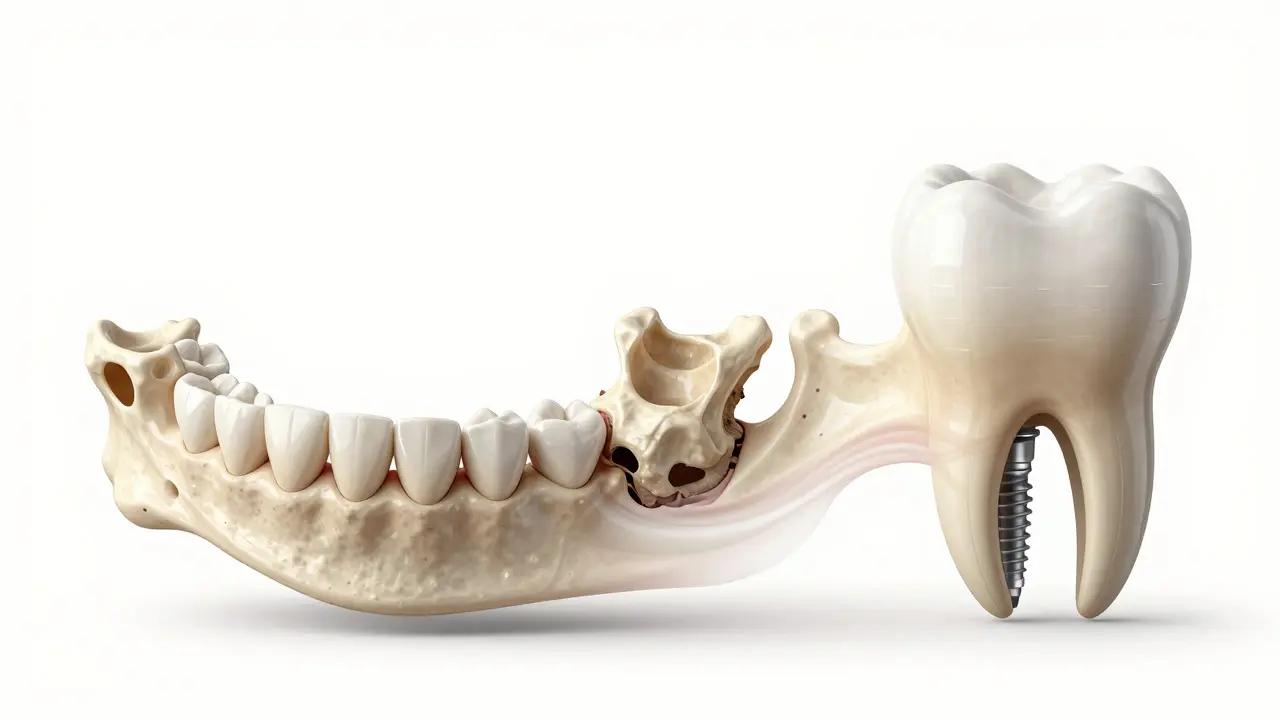
You don’t get implants right after the graft. Bone needs time to grow. The timeline looks like this:
- 0-3 months: Healing phase. No pressure on the area.
- 4-6 months: Bone starts integrating. Follow-up scan usually done.
- 6-9 months: Bone is dense enough. Implant placed.
Some newer techniques allow for “immediate loading” - placing the implant at the same time as the graft. But this only works if the bone defect is small and the graft is very stable. It’s not common.
Co můžete dělat, aby to šlo lépe?
Here’s what really helps:
- Nepalte - smoking cuts blood flow and kills bone growth.
- Pijte dost vody - hydration helps healing.
- Nechte si zubní lékaře vypracovat plán - don’t just say “I want implants.” Ask for a 3D scan and a written treatment plan.
- Nečekáte - the sooner you act after losing a tooth, the less bone you lose.
Many patients in Brno come in after years of waiting. They think, “I’ll do it when I have money.” But the cost of rebuilding bone is often higher than the cost of getting implants right away. Prevention saves money - and pain.
Je to bezpečné?
Yes. Augmentace kosti is one of the most predictable procedures in implant dentistry. Success rates are above 95% when done by experienced practitioners. Complications are rare - infection, graft failure, or nerve damage happen in less than 3% of cases.
What matters most is the experience of your dentist. Look for someone who does at least 20 implant procedures a month. Ask to see before-and-after scans. A good clinic will show you exactly how your bone will look after healing.
Co dělat, když jste si už vybrali implantát?
Don’t assume you’re ready. Many patients think: “I got an implant - I’m done.” But if the bone isn’t strong enough, the implant will fail. Always get a 3D CT scan before you commit. It’s not expensive - around 2 500 Kč. It shows you the exact height and width of your bone.
If the scan shows thin bone, don’t panic. Augmentace kosti is routine. It’s not a setback - it’s part of the plan. A good dentist will explain why it’s needed, not just say “we have to do it.”
Co je další krok?
If you’re missing teeth and thinking about implants, don’t wait. The longer you wait, the more bone you lose. Start with a consultation. Ask for a 3D scan. Ask if you need bone grafting. Ask for a written plan.
Most clinics in Brno offer free initial consultations. Use them. You’re not committing to anything. You’re just getting the facts. And with the right plan, you can get back to eating your favorite foods - without pain, without worry.
Je augmentace kosti nutná pro všechny implantáty?
Ne. Pokud máte dostatek kosti, implantát můžete dát hned. To se stává, když jste ztratili zub nedávno nebo máte silnou čelist. Ale pokud jste ztratili zub před více než 6 měsíci, pravděpodobně potřebujete augmentaci. Každý případ je jiný - proto je 3D skenování důležité.
Může být augmentace kosti provedena zároveň s implantací?
Ano, ale jen v určitých případech. Pokud je ztráta kosti malá a implantát může být stabilně umístěn, lékař může dát implantát a kostní materiál najednou. To se často dělá u jednotlivých zubů v přední části čelisti. Pro větší defekty nebo ztrátu více zubů je lepší nechat kost nejdřív narůst.
Jak dlouho trvá zotavení po augmentaci kosti?
První týden je nejdůležitější. Můžete mít otok a mírnou bolest, která odejde za 3-5 dní. Celkové zhojení kosti trvá 4-9 měsíců. To je čas, který potřebuje váš organismus, aby vytvořil novou, silnou kost. Nenechávejte se přesvědčit, že to jde rychleji - kvalita je důležitější než rychlost.
Může augmentace kosti selhat?
Ano, ale velmi zřídka - v méně než 5 % případů. Nejčastější příčiny jsou kouření, infekce, špatná hygiena nebo přílišný tlak na oblast během zotavení. Pokud dodržíte pokyny lékaře, šance na úspěch jsou přes 95 %. Výběr zkušeného specialisty je klíčový.
Je augmentace kosti platná i pro starší lidi?
Ano. Věk není překážkou. Mnoho pacientů ve věku 70 a více let úspěšně projde augmentací a získá implantáty. Důležitější než věk je celkové zdraví. Pokud nemáte diabet, nejste na dlouhodobé léky, které ovlivňují hojení, a nekouříte, jste skvělým kandidátem. Většina lékařů v ČR má zkušenosti s léčbou starších pacientů.